Tuesday, May 31, 2005
Friday, May 27, 2005
The Asset-Based Truth
Have you ever found yourself not telling the truth to people in fear that it might cause them to have a negative reaction because of hurt feelings or triggered anger? This is a very common scenario in peoples lives. We hold back potentially positive feedback in fear that the conversaton could backfire. We revert back to our Defecit-Based Thinking ways.Asset Based Thinking asks each one of us to tell the truth fast. This means giving constructive feedback to others, regardless of how you might think they would react.
Thursday, May 26, 2005
Take A Step Back And Breath
An Asset-Based Thinking trick that is useful to learn is the power of breath control. You must learn to focus your breathing during high pressure situations. This will teach your body to shift from reactiveness to responsiveness. The next time a situation arises begin to take deeper, longer breaths. Five or Six deep breaths will make a world of difference!Thursday, May 19, 2005
Your Asset Based Affirmative Zone
Next time you are confronted with a problem, try to take a moment before reacting. We are so used to facing a problem by casting blame upon someone else. But what if the next time we are faced with a situation we see what positive things could come out of it. By moving into our Affirmative Zone we maximize our leverage as Asset-Based Thinkers.Friday, May 13, 2005
Asset Based Focus of the Week: Linda Gray
Asset Based Focus of the Week: Linda Gray"When The United Nations invited me to work as the UNFPA ambassador I was honored, and at the same time, concerned. Global population must be stabilized, but how do you tell a woman in a developing country that the one act which gives her life value must be re-examined? Do we have that right? Or should we say; We have a responsibility to help her have a healthy baby and provide education and opportunity that will add even more value to her life. These issues need to be discussed by women and men around the world and my role is to meet people, listen to what they have to say and see what we can do to help.”
- Linda Gray -
Thursday, May 12, 2005
Change Your Daily Routine
Daily we must decide to focus on our strengths and what we are capable of doing rather than the daily routine of magnifying flaws and pointing out short-comings. A main source of this is the people we surround our selves with. We can choose to build relationships with people who are interested in progress. Progress, not only for themselves but for others around them. Challenge yourself to concentrate more on what you want to have happen rather than what we dont want to happen. Asset Based Thinking is always ready when you are.Tuesday, May 10, 2005
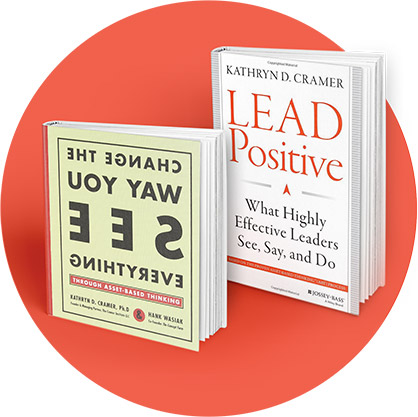
In spite of our biological programming, deficit based thinking does not have to rule minds, spirits, or actions. With concentrated, well-guided effort, we can regain energy, harness our inherent ( albeit sometimes latent ) optimism, and powerfully engage what life has to offer. All it takes is a shift (ever so slightly) in the way we see everything
Monday, May 09, 2005
ABT Factoid
According to the U.S. Department of Labor, the number-one reason people leave their jobs is because they "do not feelappreciated" Ninety-nine out of every 100 people report that they want to be around more positive people; 9 out of 10 report being more productive when they are around positive people.A landmark study of 180 elderly Catholic nuns revealed that nuns with more positive emotions lived significantly longer than nuns with fewer positive emotions. The researchers studied handwritten autobiographies each woman had written in her early twenties. The frequency of positive emotions in these early writings was scored and compared to mortality rates for these women when they were 75 to 95 years old. The results were staggering.
The nuns who reported experiencing more positive emotions lived, on average, about 10 years longer. Even more startling was the fact that 25 nuns in the group with fewer positive emotions had passed away at the time of the study, compared with only 10 deaths in the group with more positive emotions