Thursday, June 23, 2005
Wednesday, June 22, 2005
Asset Based Thinking G.A.P.
Many people attest to the fact that in hindsight, suffering the blows of their worst, most challenging disappointments and defeats have handed them some of their most valuable lessons and helped them to create a positive Asset Based Thinking G.A.P.ABT Gratitude: For those people who hung in there or who dove in to help.
ABT Appreciation: For the bounty and blessings life and living have to offer
ABT Perspective: Which priorities are really most important?
Tuesday, June 21, 2005
Asset Based Thinking Advantage
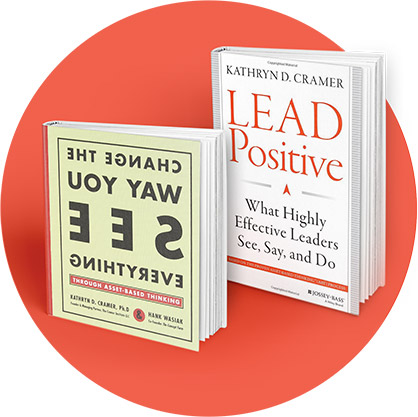
It is far easier to Change the Way You See Other People when you want them to join you in achieving worthwhileand aspiring goals. This is the place to start. It is far more difficult and more challenging to view people
through a positive, Asset-Based lens when they are pushing back on your ideas or are in conflict with the
direction you want to go.
Asset Based Thinking teaches you how to use positive filters to get more traction when interacting with other people, and shows you how to re-activate a special instinctive positive filter that we are all born with. Over the course of life, your inborn positive filter has been overshadowed and shut down by deficit-based thinking, so you have to reactivate it. With ABT you will encounter people with a spirit of acknowledgement and praise for what they have to offer.
Monday, June 20, 2005
The Key Themes to Integrate on your way to an Asset Based Thinking way of life
Having vision makes life more meaningful and integrated. Be sure to integrate Intimacy, Spirituality, Legacy – as you turn on the next best vision of your life. Research shows that these particular themes make significant contributions to personal health and well - being.Friday, June 17, 2005
The 5 to 1 Rule for Asset Based Thinkers
Think about who you are and how you add value. Make a list of at least 5 personal assets (strengths, talents, skills and virtues) that make a significant contribution to your effectiveness. Next, think of 1 deficit (limitation, shortcoming, or weakness) that is the most significant barrier to your effectiveness. Now think about the challenges and opportunities you currently face.How can you leverage the 5 personal assets you have listed in meeting your challenges and realizing your opportunities?
This is called the 5 to 1 rule.
Focus on 5 assets for every 1 deficit. Put this rule into practice to build your own momentum and the momentum of others who matter to you.
Thursday, June 16, 2005
Asset Based Thinking Adversity
As an Asset Based Thinker you must learn to agree with what happens. From that vantage point try to see reality clearly and problem solve from that vantage point. Agreeing with your reality doesn't mean you are thrilled with the setback. You can have an accepting attitude, without endorsing or reveling in them.Wednesday, June 15, 2005
Affinity Neighborhoods. "The dual strategy of making money and
revitalizing neighborhoods" is "the underlying philosophy of Affinity
Neighborhoods," reports Kelly Barron in Fortune Small Business (May
05). The concept is the brainchild of 40-year-old David Frayne, a
former Johnson & Johnson database manager who originally started
dabbling in real estate in 2003 in hopes of retiring young and
becoming a classical composer. But now that he's purchased a total of
"47 dilapidated houses in Compton, Long Beach and Los Angeles," fixed
them up and turned them around with "average returns of about 50
percent," David is thinking in even loftier terms: "I am through
complaining about the world's problems," he says, "I want to show
people how they can make money in a clean, cooperative way."
That way, according to David, is database-driven. He's written a
software program called "The Scraper" that "culls information from
databases that track everything from crime statistics to school test
scores to weather reports. Sophisticated algorithms correlate the data
with houses on the market. The software then sets purchase prices and
predicts appreciation based on factors such as property setbacks,
square footage, and amenities ... The Scraper digs through about 1,000
likely properties each night, spitting out the best candidates ...
Once Affinity, affinityneighborhoods.com, zeroes in on an area, it
buys properties in clusters." Says David: "Our technology and market
analysis are designed to ensure that we are in the right place at the
right time." And then a funny thing happens, according to David -- the
drug dealers leave, the bars come off the windows and the neighbors
start picking up the trash. Sounds like a page out of The Tipping
Point, yes?
David sometimes lives in the neighborhoods where he invests and, in
Compton, he actually went door to door asking residents to clean up
their yards. His pitch: Cleaning up would boost property values and
reduce crime. He collected 200 written commitments." David also has
about $2.5 million in backing from Gateway Cities Partnership,
gatewaycities.org, with plans to "buy another 50 houses over the next
year." Of course, not everyone thinks "gentrification" truly solves
America's housing problems: "You fix one problem, but you create
another," says one critic, noting that some residents are priced out
of the rehabbed neighborhoods. Ironically, David Frayne himself has
now been priced out of Compton, where "housing prices have soared 43
percent in the last year." Undaunted, he's moved on to "Phoenix where
the Scraper says properties are still undervalued," and he says he
"hopes to raise $100 million to buy houses in depressed neighborhoods
nationwide."
revitalizing neighborhoods" is "the underlying philosophy of Affinity
Neighborhoods," reports Kelly Barron in Fortune Small Business (May
05). The concept is the brainchild of 40-year-old David Frayne, a
former Johnson & Johnson database manager who originally started
dabbling in real estate in 2003 in hopes of retiring young and
becoming a classical composer. But now that he's purchased a total of
"47 dilapidated houses in Compton, Long Beach and Los Angeles," fixed
them up and turned them around with "average returns of about 50
percent," David is thinking in even loftier terms: "I am through
complaining about the world's problems," he says, "I want to show
people how they can make money in a clean, cooperative way."
That way, according to David, is database-driven. He's written a
software program called "The Scraper" that "culls information from
databases that track everything from crime statistics to school test
scores to weather reports. Sophisticated algorithms correlate the data
with houses on the market. The software then sets purchase prices and
predicts appreciation based on factors such as property setbacks,
square footage, and amenities ... The Scraper digs through about 1,000
likely properties each night, spitting out the best candidates ...
Once Affinity, affinityneighborhoods.com, zeroes in on an area, it
buys properties in clusters." Says David: "Our technology and market
analysis are designed to ensure that we are in the right place at the
right time." And then a funny thing happens, according to David -- the
drug dealers leave, the bars come off the windows and the neighbors
start picking up the trash. Sounds like a page out of The Tipping
Point, yes?
David sometimes lives in the neighborhoods where he invests and, in
Compton, he actually went door to door asking residents to clean up
their yards. His pitch: Cleaning up would boost property values and
reduce crime. He collected 200 written commitments." David also has
about $2.5 million in backing from Gateway Cities Partnership,
gatewaycities.org, with plans to "buy another 50 houses over the next
year." Of course, not everyone thinks "gentrification" truly solves
America's housing problems: "You fix one problem, but you create
another," says one critic, noting that some residents are priced out
of the rehabbed neighborhoods. Ironically, David Frayne himself has
now been priced out of Compton, where "housing prices have soared 43
percent in the last year." Undaunted, he's moved on to "Phoenix where
the Scraper says properties are still undervalued," and he says he
"hopes to raise $100 million to buy houses in depressed neighborhoods
nationwide."
Monday, June 13, 2005
When your experiences(past, present, and future) are dominated by Asset Based Thinking you can easily turn turmoil into an advantage. It is incredibly rewarding to see your sense of purpose before, during, and after you encounter a difficult situation. It is well worth the search to discover who is on your side, who can help you, and who can be committed to your cause.